Getting Clear of Traffic Comes First
We’ve been in business for several generations and have seen our fair share of accidents. So scenarios like this one are not uncommon: a jackknifed Freightliner needs to be pulled off the center median near Federal Way after the driver clipped a guardrail in heavy fog. The rig is still blocking two lanes when we arrive. On I-5 semi towing calls like that, the first few minutes are not about the truck. They are about getting the driver and anyone else nearby out of danger.
If the vehicle can move at all, getting it onto the shoulder or farther from traffic helps lower the risk of a second crash. If it will not move, turn on the hazards and get behind the guardrail if you can do that without crossing traffic. We see too many close calls when drivers stay near the trailer trying to inspect damage while cars are still sliding past.
Securing the Scene Before the Hookup
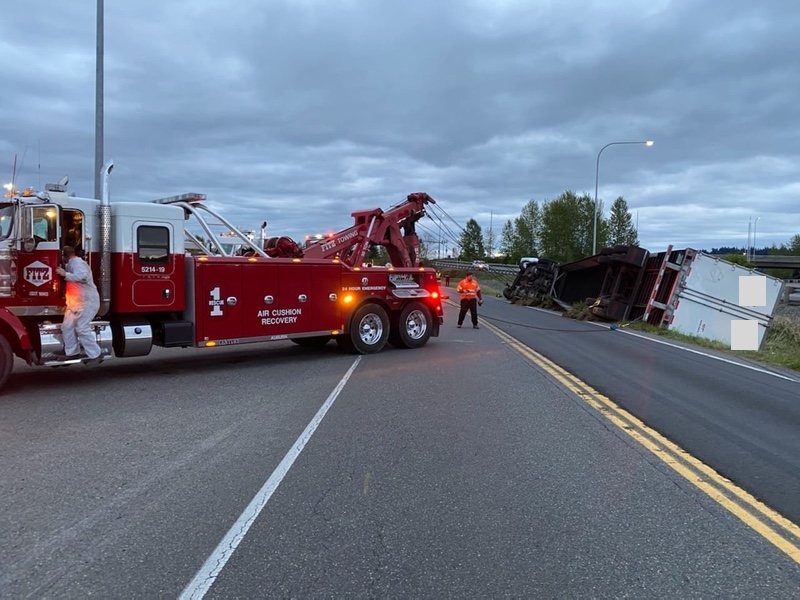
Once everyone is clear, we look at the scene before we touch the truck. We check for fuel leaks, cargo spills, damaged axles, loose debris, and trailer position. On I-5 between Tacoma and Auburn, weather and traffic can change the job in a few minutes.
A secured scene lets us work without guessing. Washington State Patrol may help with lane control, cones, or traffic direction before the wrecker is positioned. A jackknifed semi in fog is already risky. A tow setup beside moving traffic needs space, timing, and a driver who is not wandering around the shoulder.
Documenting Damage While You Wait
We always tell drivers to take photos before anything gets moved, but only from a safe spot. Get wide shots of the truck position, trailer angle, road surface, debris, and visible damage. Close-ups help too, especially around the hitch, undercarriage, tires, lights, and impact area.
Good photos can help the fleet, insurer, and repair shop later. On I-5 semi towing jobs, we have seen claims slow down because nobody documented a cracked axle housing or shifted cargo before the scene changed. Write down the time, weather, and what happened while it is still fresh. Do not stand in traffic for a better angle.
The Quick Checklist Drivers Should Remember
Even a minor crash can shake a driver up. Adrenaline can hide pain, and a driver may not feel a stiff neck, back injury, or dizziness until later. If anything feels wrong, wait for medical help instead of walking around the scene.
A simple order helps:
- Turn on hazards
- Check for injuries
- Move clear of traffic
- Call 911 if lanes are blocked or anyone is hurt
- Call dispatch with your exact location
- Take photos from a safe spot
- Leave cargo and major repairs alone
For I-5 semi towing, those details tell us what to send and how to approach the scene.
Knowing What Kind of Recovery Is Needed
Not every crash needs the same response. A truck that still rolls may need a basic tow to a nearby shop. A jackknife, rollover, shifted load, broken axle, or fuel leak can turn into a longer recovery with lane control and extra equipment.
That is why I-5 semi towing starts with good information. Is the trailer loaded? Is cargo spilled? And is the tractor upright? Are brakes locked? Is the truck blocking lanes? Clear answers help us bring the right wrecker and avoid wasting time on the shoulder.
Fitz Towing Handles I-5 Semi Towing Around the Clock
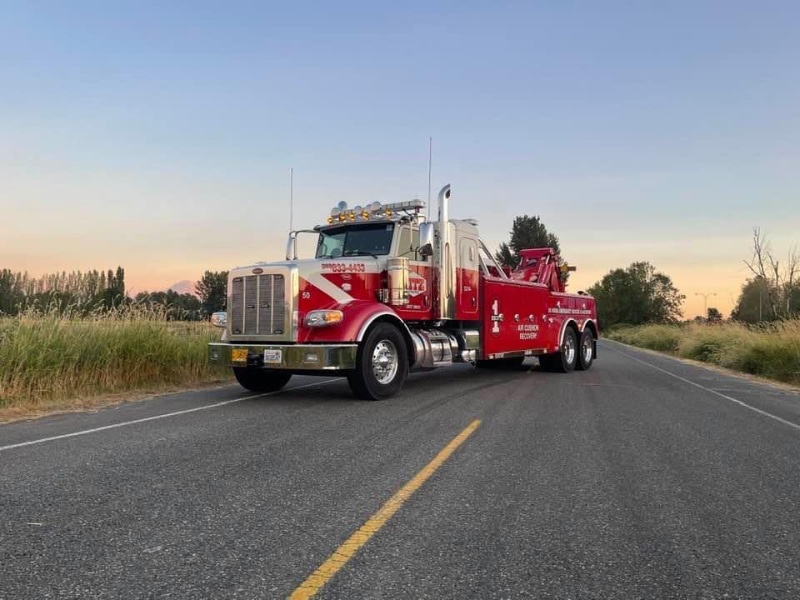
Fitz Towing has handled I-5 semi towing calls out of Auburn since 1929. Our heavy-duty wreckers respond to jackknifes, rollovers, breakdowns, blown tires, and crash scenes between Tacoma, Federal Way, Puyallup, Lakewood, and nearby I-5 stretches. We work with state troopers, insurance contacts, and fleet managers when a semi needs to be moved after a crash.
Most calls follow the same practical order: assess the scene, protect the driver, secure the truck, and move it without adding damage. Our I-5 semi towing team sees the same lesson again and again in fog, rain, darkness, and rush hour traffic. The first ten minutes do not need to be perfect, but they do need to be smart.
FAQ
Should I move my semi after a crash if it’s still drivable?
Only if you can safely get it completely off the travel lanes and onto a wide shoulder. If the truck is blocking traffic and won’t move easily, leave it in place, turn on your hazards, and get yourself to a safe spot. Moving a damaged rig can make things worse if the axle or steering is compromised.
What information do I need to give the tow operator when I call?
Tell us your exact location, the type and size of your truck, whether it’s loaded, and what kind of damage you see. Mention if there’s a fuel leak, cargo spill, or if the trailer is tipping. The more details we have, the faster we can bring the right equipment and crew.
How long does it usually take to clear a semi from the highway?
It depends on the damage and the position of the truck. A simple pullback from the shoulder might take 20 minutes. A full rollover with cargo cleanup can take several hours. We work as fast as we can without cutting corners on safety.
Do I need to stay with the truck until the tow arrives?
If you’re in a safe location away from traffic, yes. If staying puts you at risk, move to a safer spot and keep your phone handy. We’ll call you when we’re close so you can guide us to the exact location.
What happens to my cargo if it spills during the crash?
We’ll help secure loose items and prevent further damage, but you’ll need to contact your shipper and possibly a specialized cleanup crew for hazardous materials. We can recommend local services if you need them.
Can I refuse a tow and wait for my own company’s truck?
If your truck is blocking traffic, law enforcement may require immediate removal to clear the road. In that case, you won’t have much choice. If you’re on a shoulder and not obstructing lanes, you might have more flexibility, but it’s best to coordinate with the officer on scene.