Why the “When” Matters as Much as the “Why”
A DPF problem does not usually show up all at once. It moves through stages, and knowing when to act at each one is what keeps a dashboard light from turning into a call for our Auburn semi recovery service. Serving Auburn, Tacoma, Federal Way, Puyallup, and the surrounding area for more than half a century has shown our team almost every version of this timeline.
A simple if-this-then-that approach makes it a lot easier to know exactly what to do the moment something changes, instead of guessing at how urgent a dashboard light actually is.
If You See This, Do That
- If a dashboard light for the DPF or emissions system appears, address it the same day instead of waiting for a scheduled service
- If the light does not clear after a longer highway run, get the system scanned before the next trip
- If power drops or the truck derates, pull over safely and call for service rather than pushing through
- If regeneration cycles start happening more often or take longer than usual, treat it as an early warning, not background noise
Each step is small on its own, but skipping one usually means dealing with the next stage sooner than expected, often at a worse time and in a worse spot to be pulled over.
Why Local Routes Make This Harder
Our local routes tend to mix short in-town trips with stretches of stop-and-go traffic, which is exactly the pattern behind a lot of the Auburn semi recovery calls we run before a truck ever reaches sustained highway speed. Add in Pacific Northwest rain and cooler temperatures for a good part of the year, and a truck gets even less of the sustained heat it needs.
That combination is part of why so many Auburn semi recovery calls trace back to a filter that never had the chance to clear itself before the derate stage. A driver splitting time between city deliveries and the occasional highway run often has no idea the truck has been quietly building toward a problem the whole time.
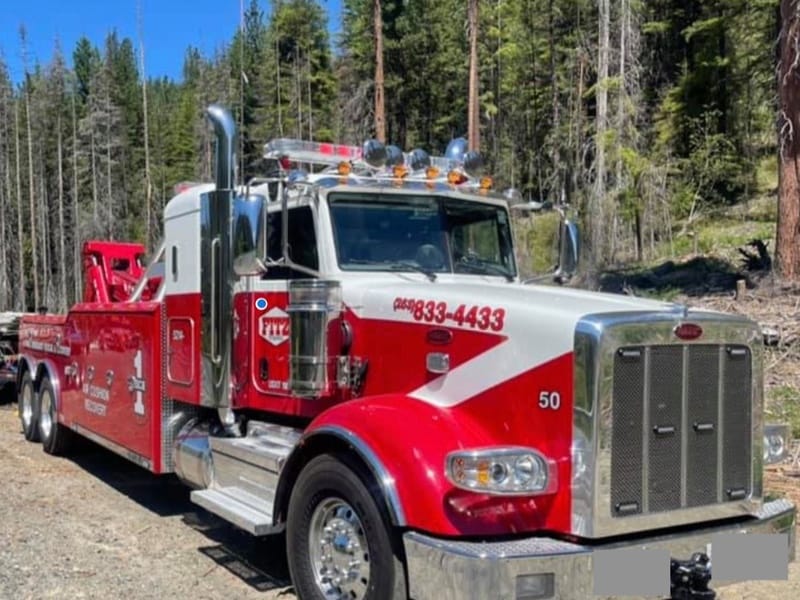
Fitz Towing & Recovery: Serving Auburn Semi Recovery Since 1929
Fitz Towing & Recovery has served Auburn and neighboring communities across Pierce and King counties since 1929, staying family-owned through generations of putting customers at the center of every decision, including every Auburn semi recovery call along the way. Our team is available 24/7, and drivers typically arrive within 30 minutes of a call, no matter if that call is a routine tow or a full Auburn semi recovery.
Every driver on our team passes background checks, maintains a clean driving record, and completes hands-on training for vehicles of every size, from compact cars and motorcycles to full semis, RVs, and buses. That standard is what shows up on every Auburn semi recovery call, day or night, rain or shine.
FAQs
How quickly should I respond to a DPF warning light?
Check it the same day. Waiting can allow more soot to collect and move the truck closer to a derate.
What does it mean if my DPF light stays on after highway driving?
The filter may not have completed regeneration, or another emissions issue may be present. Have the system scanned before starting another trip.
Why is my truck regenerating more often than usual?
Frequent regeneration can indicate that soot is building faster than normal. Changes in driving patterns or an emissions system problem may be contributing.
Can stop-and-go driving cause DPF trouble?
Yes. Repeated low-speed trips and idling may prevent the exhaust from reaching the conditions needed for normal regeneration.
What happens when a truck enters derate?
The truck’s computer limits engine performance after detecting certain problems. Depending on the fault and severity, the driver may notice reduced power or speed.
Should I keep driving if my semi suddenly loses power?
Find an appropriate place to stop and check the dashboard warnings. If the truck has entered derate and cannot continue normally, arrange service rather than trying to finish the route.