Pulling the Job Together
Not every disabled vehicle ends up on a flat, accessible surface. Some go off the road. Some roll. And some sink into soft terrain or end up wedged in a position that blocks a direct hook-up. Our Renton towing team encounters both types of calls regularly. Knowing which situation is in front of the crew determines everything about the response.
The Pacific Northwest adds its own variables to that read. Off-road terrain, steep embankments, wet soft ground, and tight residential streets all show up in the region’s call mix. Assessing the vehicle’s position quickly is how crews determine what equipment goes to work first.
When the Call Requires a Winch
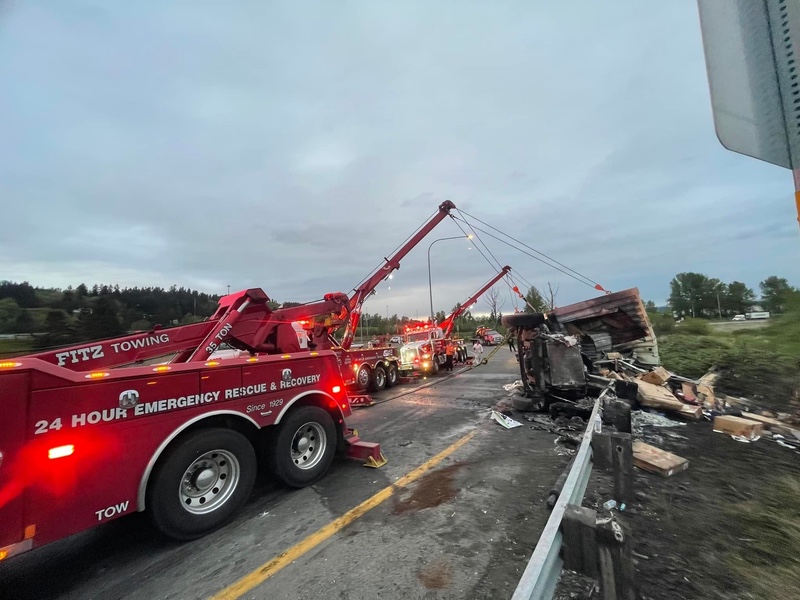
Winching uses a powered cable to extract a vehicle from a position it cannot be towed from directly. The cable runs from the recovery truck, often through snatch blocks to redirect and multiply pulling force. Extension cables add reach for vehicles further off the accessible surface. Anchoring keeps the recovery truck stable throughout the pull. The goal is a controlled extraction that brings the vehicle out cleanly.
What a Car Stuck Off the Road Tells the Operator
A car in a ditch or down an embankment needs extraction before it can be towed. That’s why we have to assess the ground, the angle, and the rigging approach before anything is connected. A poorly planned extraction damages the vehicle further and can compromise the recovery truck.
The plan needs to come way before the cable.
Once the Vehicle Is Out, Towing Can Begin
Towing is transport. Once on an accessible surface, a vehicle can be loaded onto a flatbed, a wheel-lift, or a heavy wrecker. The right method depends on the vehicle type. All-wheel-drive vehicles go on flatbeds. Light vehicles without drivetrain damage can go on a wheel-lift. Semis and large commercial loads need heavy wrecker configurations.
Our Renton towing dispatchers confirm vehicle type and position before assigning a unit. A flatbed suited for a compact car is not the right truck for a heavy-duty recovery. The questions dispatchers ask before the truck rolls are what keep the right equipment arriving at the right call.
Winching vs Towing: When Each Applies
Here is a quick guide:
- Towing: vehicle is on a stable, accessible surface and ready for direct hook-up
- Flatbed towing: all-wheel-drive vehicles, low-clearance cars, and high-damage vehicles
- Wheel-lift towing: lighter vehicles with accessible axles and no drivetrain damage
- Heavy wrecker towing: commercial trucks, semis, and large loads on accessible ground
- Winching: vehicle is off-road, in a ditch, or in a position that blocks a direct approach
- A Renton towing call may need winching first, towing second, or only one of the two
Fitz Towing: Renton Towing Backed by Nearly a Century of Experience
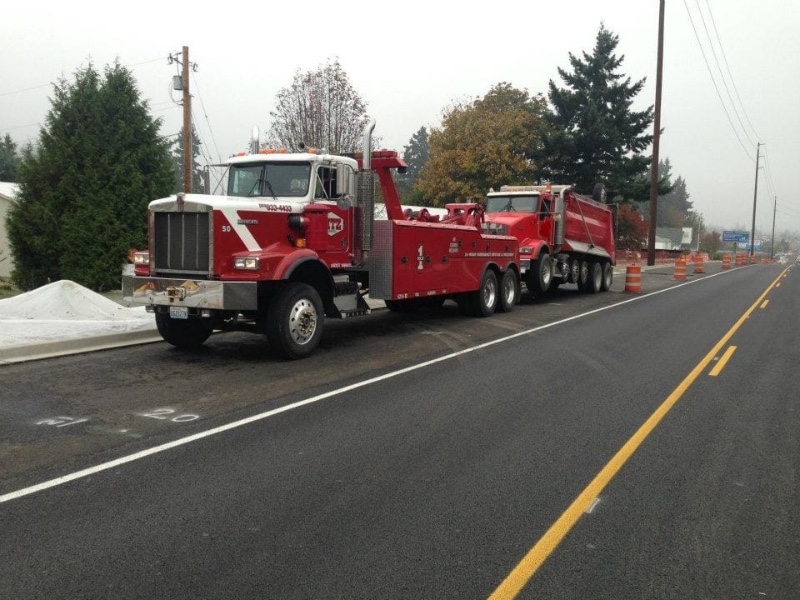
Fitz Towing has been serving the region since 1929 as a family-owned operation. The fleet covers compact cars, motorcycles, semis, RVs, and buses. Every Renton towing call is matched to the right equipment before the truck leaves. Operators meet strict hiring standards: background checks, clean driving records, and hands-on training across vehicle types. No matter the size of the vehicle, it gets handled with care throughout.
Our Renton towing team runs 24/7 across King County and surrounding areas. Under standard conditions, drivers typically arrive within 30 minutes of the call. That response time holds regardless of the hour. When a Renton towing call comes in, the same standard applies: right equipment, right operator, first time.
FAQ
Can a vehicle with all-wheel drive be towed on a wheel-lift?
No. A wheel-lift raises either the front or rear axle while the other set of wheels stays on the ground. For an all-wheel-drive vehicle, that means the driveshaft on the rolling axle continues to turn during transport, which can cause significant drivetrain damage. All-wheel-drive and four-wheel-drive vehicles should be transported on a flatbed with all four wheels off the ground.
What happens if a towing company sends the wrong equipment to a call?
If the arriving unit cannot handle the situation, the operator holds the scene and calls for the correct equipment. This adds time to the recovery and can leave a disabled vehicle in a hazardous position longer than necessary. Professional dispatch reduces this by gathering accurate information before assigning a unit, but conditions on scene sometimes differ from what was reported.
How does a snatch block improve a winching operation?
A snatch block is a pulley anchored to a fixed point near the stuck vehicle. Running the winch cable through it redirects the pull angle and can double the effective mechanical advantage. This is useful when a straight-line pull is not possible, when the angle would put stress on the vehicle’s structure, or when additional force is needed without exceeding the winch’s rated line pull.
What is the difference between a recovery and a standard tow?
A standard tow moves a vehicle that is already in an accessible, towable position. A recovery involves returning a vehicle to a towable position first, which may require winching, rigging from unusual angles, stabilizing a rolled vehicle, or extracting from terrain. Recovery operations take more time and require rigging equipment beyond what a standard flatbed or wheel-lift carries.
How do operators approach a winching job on a steep or wet slope?
On a steep or wet slope, anchoring and rigging become more critical than on flat ground. The recovery truck must be positioned on stable footing and anchored to prevent it from being pulled forward. Snatch blocks are commonly used to redirect the pull and reduce strain on the line. Operators assess footing, grade, and soil stability before committing to a rigging plan in those conditions.
What should I look for when choosing a towing company for an emergency call?
Look for 24/7 availability, a dispatcher who asks specific questions about the vehicle and its position, and a fleet that includes both flatbeds and recovery-capable wreckers. Experience with your vehicle type matters, especially for commercial vehicles, RVs, or all-wheel-drive cars. A company that dispatches the right unit the first time saves both time and potential additional damage to the vehicle.