Moving the Movers
Medium duty towing lives in that underappreciated space between everyday cars and the lumbering giants of the road. It’s the space where delivery vans, work trucks, and box trucks cruise through town, often unnoticed until they’re not moving. When these vehicles stall out or get stuck, the towing approach is a different game altogether. We’ve towed a lot of vehicles over the years, and the truth is, Auburn van towing isn’t like hauling a Civic. These machines are heavier, taller, and loaded with everything from plumbing gear to bakery goods. Understanding what makes medium duty towing different helps explain why not every tow truck, or every tow operator, is up to the task.
Not Your Average Tow
Medium duty vehicles typically weigh between 10,000 and 26,000 pounds. They serve as the backbone for many local businesses: think HVAC companies, courier fleets, electricians, and mobile service pros. That means they’re often loaded up and ready for work when something goes wrong.
When a medium duty vehicle breaks down, it’s rarely parked in a wide-open lot with plenty of room to maneuver. We find them wedged between dumpsters, nose-first into delivery docks, or stalled halfway into a busy intersection. The towing process starts with solving a puzzle: figuring out how to safely reach, lift, and transport a vehicle that wasn’t designed to make it easy.
Types of Medium Duty Vehicles We See Most
Box Trucks
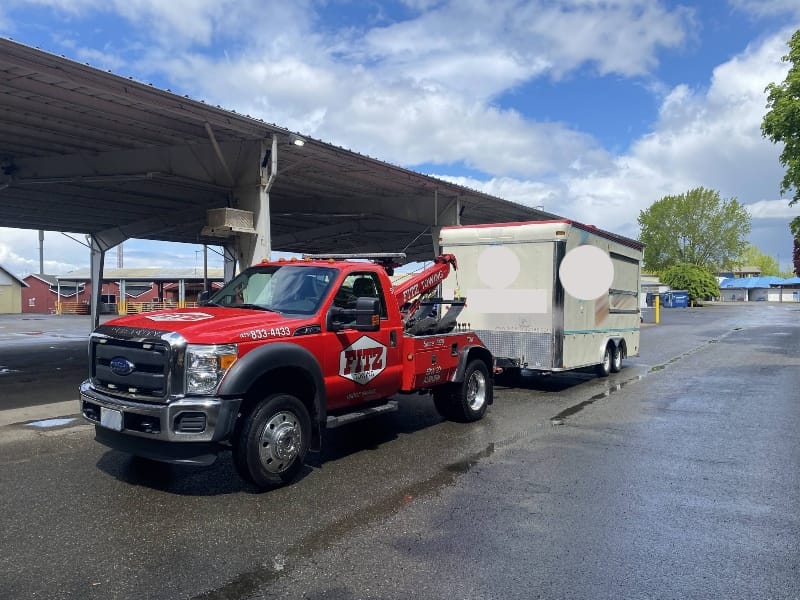
These are the backbone of small-scale logistics: compact enough to navigate cities but big enough to haul serious cargo. Box trucks are often loaded down when trouble hits, and the added weight can impact how we rig and tow them. Getting it wrong risks damaging the drivetrain or suspension, so attention to detail matters.
Delivery Vans
From flower shops to Amazon packages, delivery vans make up a huge portion of the medium duty calls we get. They’re lower than box trucks but no less challenging. Tight spaces and narrow alleyways are the norm, and Auburn van towing often means navigating a maze before we even touch the vehicle.
Work Trucks
These come in all shapes and setups, think: utility beds, ladder racks, or custom storage compartments, and they’re rarely empty. Many are loaded with tools, fuel tanks, or job-site materials. The uneven weight distribution and custom builds can throw off balance points, so we plan every lift carefully.
Common Challenges in Medium Duty Towing
- Limited clearance: Height and weight restrictions make certain routes off-limits. We often have to plan detours that a regular sedan could slip through without a second thought.
- Loaded cargo: Unlike passenger vehicles, these rigs usually carry gear or goods, and that load shifts during towing. That’s a real hazard if not accounted for.
- Unusual breakdown locations: From industrial parks to tight residential streets, we’re often towing out of spots that feel like someone parked in the middle of a Tetris game.

When You Call Fitz Towing for Auburn Van Towing
At Fitz Towing, we know the terrain. Auburn van towing is part of our everyday rhythm. We’re set up to handle delivery vans, box trucks, and work trucks with the care and strategy they require. Our team doesn’t guess; we calculate. We assess load weight, clearance, and access points before making a move.
We handle a wide range of Auburn van towing calls, including:
- Local delivery vans that need quick roadside recovery
- Commercial box trucks that can’t make it to the shop
- Fleet work trucks stalled during service runs
- Accident recoveries involving medium duty vehicles
- Scheduled tows for vehicles awaiting repair
When you’re stuck mid-route, time isn’t just money, it’s also your reputation. Our Auburn van towing experts will get you back on track without adding to the chaos. We know these vehicles matter, and we treat them like they do.
For Auburn van towing done right, Fitz Towing is here to help.
FAQ
What is considered a medium duty vehicle?
A medium duty vehicle typically weighs between 10,000 and 26,000 pounds. This includes delivery vans, utility trucks, box trucks, and some small buses or RVs.
How is medium duty towing different from regular towing?
Medium duty towing involves heavier vehicles, often with uneven weight distribution or added cargo. It requires stronger tow trucks and more precise planning than standard car towing.
Can a fully loaded work truck be towed safely?
Yes, but it requires extra care. The towing team must assess the vehicle’s weight, balance, and contents before hooking up to avoid damage or shifting during transport.
Is it possible to tow a vehicle from a tight space or alley?
Towing from narrow or awkward spaces is possible with the right equipment and experience. Wheel-lift and flatbed techniques can be used depending on access and vehicle type.
Do all tow trucks handle medium duty vehicles?
No. Only certain trucks are built to handle the size and weight of medium duty vehicles. Using the wrong type of equipment can cause damage or create safety issues.
What should I do if my work truck breaks down while on a job?
Secure the vehicle as best you can, keep it visible to others on the road, and call a towing company that handles medium duty vehicles. Make sure to describe the situation and vehicle type when you call.