The Split-Second That Folds a Rig
Jackknifes sit on a lot of drivers’ mental list of worst-case moments. The road feels fine, the load feels normal, and then the rig gives you that quick, wrong feeling in the seat and steering wheel, like the trailer has started writing its own plan. Jackknifes aren’t an everyday event, but they’re dramatic enough that most drivers can picture one instantly, and that’s what makes them so memorable. On our US interstates, the traffic pace, the long grades, and the sudden slowdowns can turn one small slide into a fast-moving problem, so we treat I-5 semi towing calls as a reminder to keep prevention habits sharp long before the pavement gets slick.
What Causes Jackknifing
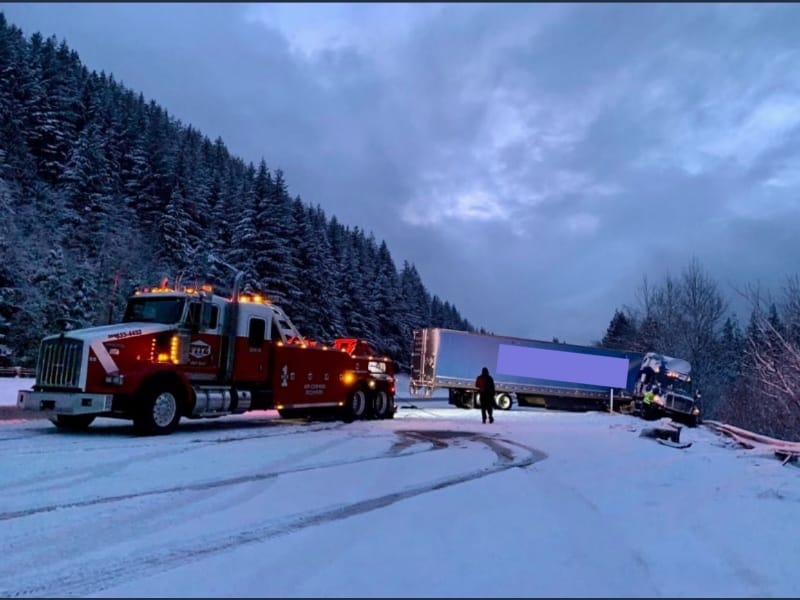
A jackknife almost always starts with a loss of traction, followed by a mismatch between what the tractor is doing and what the trailer is doing. Braking, turning, and road conditions stack the odds.
Here are the most common causes:
- Overbraking the drive axles: Hard braking can lock the drives or reduce traction enough to start a skid, especially if the road is wet or slick.
- Trailer push in low traction: The trailer has weight and momentum, and it can shove the tractor forward even when the tractor is trying to slow down.
- Speed too high for conditions: “Normal” speed on dry pavement can be too fast the moment rain, frost, standing water, or debris shows up.
- Downhill grades and braking on curves: Braking while turning can pull traction away from where you need it most.
- Uneven or shifting loads: Poorly balanced weight can make the trailer less stable and more likely to swing.
- Following too close: A short following distance forces sudden braking, and sudden braking invites skids.
- Driver inputs during a skid: Counter-steering too late, braking harder, or trying to “muscle” the rig back in line can increase the angle instead of reducing it.
How to Prevent Jackknifing Before It Starts
We focus on prevention because once the angle starts closing, the window for an easy correction shrinks. The best defense is traction management, planning, and smooth inputs.
Slow down earlier than you think you need to
If traction drops, we want speed to drop first, before we touch the brakes hard. That means easing off the throttle early and letting the rig settle. On I-5, we plan for traffic waves, sudden slowdowns near interchanges, and the way weather changes across elevation and shaded stretches.
Brake straight, then turn
We try to get most of our braking done in a straight line. Entering a curve already slowed gives the tires a better chance to keep grip. Braking hard mid-turn can start the trailer swing that leads to jackknifing.
Keep following distance generous
More space means fewer panic stops. More space also gives us options: gradual braking, lane planning, and time to read what four-wheelers are about to do.
Be careful with engine braking on slick roads
Engine braking can help, but on low-traction pavement it can contribute to drive-wheel slip. We keep it conservative in rain, frost, or any time we feel traction go “light.”
Pay attention to the trailer’s behavior
We watch mirrors often and look for early signs: trailer drift, a slight sideways wiggle, or a sensation that the trailer is pushing the tractor. If it feels off, we reduce speed and smooth out inputs right away.
Fitz Towing Helps Drivers Get Back on the Road with I-5 Semi Towing
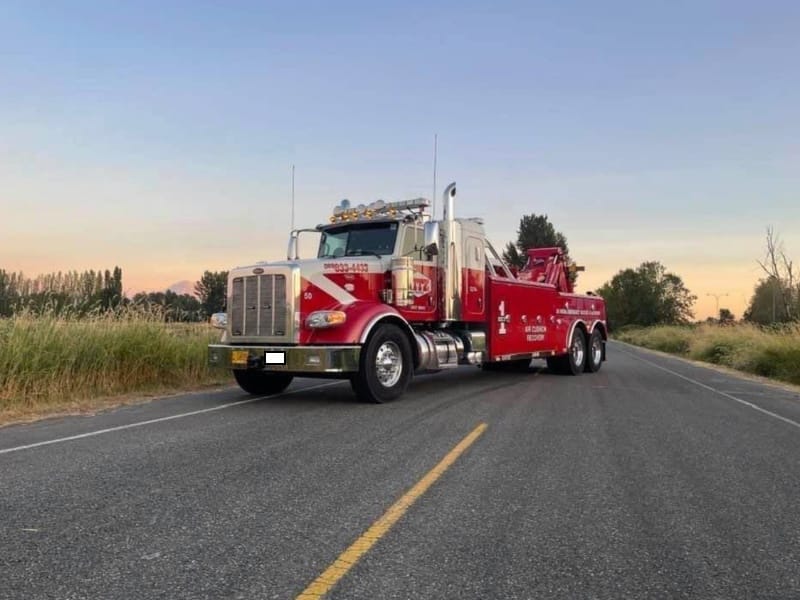
We run calls where a jackknife leaves a trailer blocking lanes, stuck in a shoulder rut, or tangled with a barrier. That’s why our I-5 semi towing experts plan recovery steps around traffic flow, roadway space, and how to straighten the combination without adding damage. On many scenes, I-5 semi towing starts with securing the area, checking stability, and choosing the safest pull path.
We also coordinate the details that keep the job moving: where the trailer needs to go, how to stage the truck, and how to reduce the angle before we apply tension. For I-5 semi towing, we think about the load type, the hitch points, and the ground surface so the rig tracks where it should. When the trailer sits at a harsh angle, recovery often involves controlled repositioning to get everything lined up again. If the shoulder is soft or the trailer slid off-line, I-5 semi towing can include winch work to bring it back without tearing up equipment. We approach I-5 semi towing with the same goal every time: restore alignment, clear the roadway, and get the unit to the next safe stop so the driver can reset and keep moving.
FAQ
What is a jackknife in a semi truck?
A jackknife happens when the trailer swings out to the side and forms a sharp angle with the tractor. It usually starts after the truck loses traction and the trailer’s momentum pushes the combination out of line.
Can a jackknife happen without heavy braking?
Yes. Heavy braking is a common trigger, but a jackknife can also start from a skid caused by a slick surface, a quick steering correction, a downhill grade, or a trailer that begins to push during a speed change.
What is the first warning sign that a jackknife may be starting?
The earliest warning is often a light, sliding feeling at the drive wheels or a sense that the trailer is no longer tracking straight behind the tractor. In mirrors, you may notice the trailer drifting off line before the angle becomes obvious.
What should a driver avoid doing during a skid?
Avoid sudden steering inputs and avoid stomping the brakes. Abrupt actions can increase the angle between the tractor and trailer and reduce traction even more.
Do load and weight balance affect jackknife risk?
Yes. Uneven weight distribution, shifting cargo, or a lightly loaded trailer can reduce stability. Balanced loading and securement help the trailer track straighter and reduce the chance of a swing when conditions change.
What habits reduce jackknife risk in everyday driving?
Start slowing earlier, leave more following distance, and do most braking in a straight line before entering curves. Smooth throttle, smooth steering, and steady attention to road surface changes lower the odds of a traction loss that leads to a jackknife.