Why Grabbing a Tow Strap Is Almost Always the Wrong Move
Many who have watched a vehicle get hitched to a trailer or strapped down on a flatbed makes the same mental calculation: how hard can it be? In Tacoma towing calls, we sometimes see the results of that question answered badly. When a DIY tow goes wrong, the damage reaches the towed vehicle, the tow vehicle, and everyone else sharing the road.
People choose to tow their own vehicles for plenty of reasonable-sounding reasons. They want to avoid a service call. They have a truck and a chain. They’ve done it once before without incident. None of those reasons account for the ways a tow can fail, and they tend to matter a lot less once something goes wrong.
The Mechanical Risks Most People Underestimate
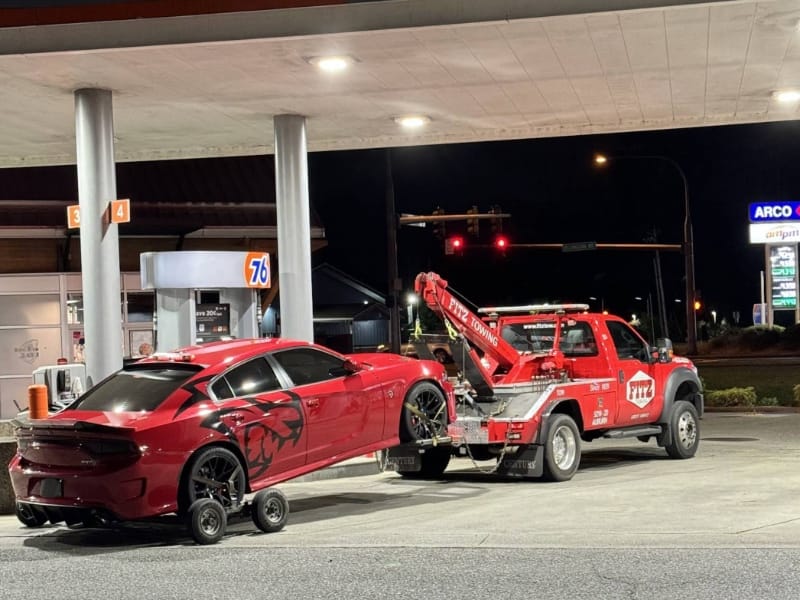
Matching the tow vehicle to the load involves more than a hitch that clicks into place. Gross vehicle weight, tongue weight, axle ratings, and brake requirements all factor in, and most people don’t have those numbers. A tow that exceeds the tow vehicle’s rated capacity puts stress on the transmission, frame, and brakes in ways that aren’t always immediately visible but accumulate with every mile.
The towed vehicle adds its own set of variables. A car with a locked steering column can’t track properly behind a tow vehicle. A vehicle with a seized parking brake creates uneven drag. A motorcycle without proper tie-down points can shift weight mid-trip. Each of these is the kind of detail a professional checks before the rig moves an inch.
Hitch and Coupler Problems
An improperly secured coupler can separate from the ball at highway speed, sending the towed vehicle into adjacent traffic. Safety chains are meant to be a backup, but they only work if they’re rated for the load, properly crossed, and attached to a structural point on the tow vehicle. A chain that’s too long, too light, or clipped to a bumper bracket offers no meaningful protection. The separation of a tow on a live highway is not a recoverable situation.
Trailer Sway and Load Imbalance
Improper weight distribution causes trailer sway, the back-and-forth oscillation that can pull a tow vehicle out of its lane and is notoriously difficult to correct once it starts. Tongue weight that’s too light, a load shifted too far back, or an improperly inflated tire on the towed vehicle can all introduce sway at highway speed. Most drivers don’t recognize sway developing until the movement is already significant.
The Legal and Financial Exposure
A vehicle involved in an accident during a DIY tow sits in uncertain legal territory. Insurance coverage often excludes incidents that occur during an improperly rigged tow, leaving the person who attempted it personally liable for damage to both vehicles and any injured parties. For most people in that situation, a licensed towing service removes the question entirely.
Beyond insurance, there are road rules that most drivers aren’t aware of:
- Towed vehicles generally require functioning tail lights
- Safety chain requirements vary by state and load class
- Some jurisdictions require breakaway brakes on trailers above a certain weight
- Certain vehicle types require licensed carriers
Violating any of these, even unknowingly, can void coverage and complicate any legal proceedings that follow an accident. Tacoma towing professionals operate within these requirements as a matter of course.
Fitz Towing Gets Tacoma Towing Done Right
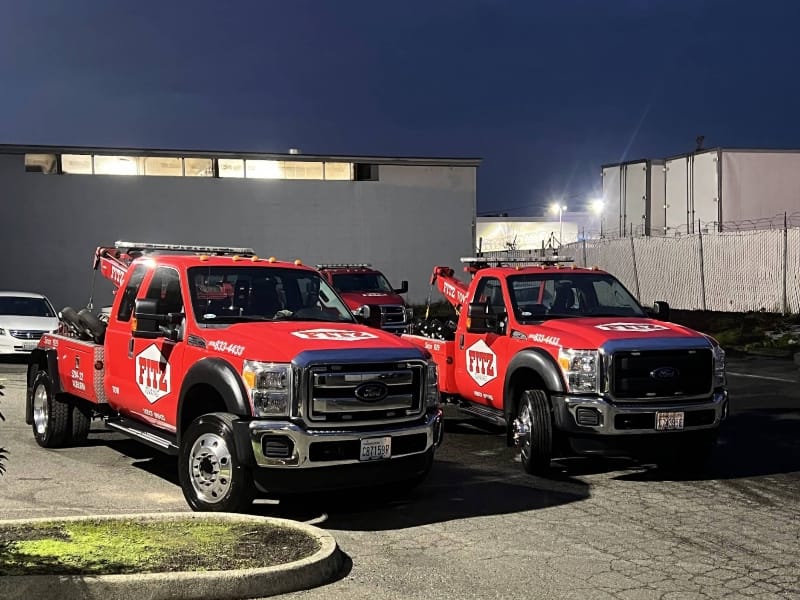
When something needs to move and doing it yourself isn’t worth the risk, Fitz Towing is the call. Our towing team handles everything from disabled passenger vehicles and motorcycles to commercial equipment, with the right gear for every job. We run Tacoma towing calls around the clock because breakdowns and unexpected situations don’t follow a schedule.
Tacoma towing done right means the right equipment for the load, properly secured connections, and an operator who knows how to move a vehicle without creating a hazard on the road. Fitz Towing brings that to every call. For Tacoma towing you can trust any time of day, we’re ready.
FAQ
Can you flat tow any vehicle, or are some cars off limits?
No. Many front-wheel-drive, all-wheel-drive, and some rear-wheel-drive vehicles cannot be flat towed without disengaging the drivetrain first, and some can’t be flat towed at all without risking transmission or driveline damage. Always check the owner’s manual before attempting any tow with all four wheels on the ground.
What is the difference between a tow dolly and a flatbed?
A tow dolly lifts only the drive wheels off the ground, leaving the other two rolling. A flatbed lifts the entire vehicle clear of the road. Flatbed towing is safer for most vehicles, particularly those with all-wheel drive or low ground clearance, because nothing is spinning or dragging during transport.
Can towing a car the wrong way damage the transmission?
Yes, significantly. Automatic transmissions are lubricated by a pump that only runs when the engine is on. Towing a rear-wheel-drive vehicle with its drive wheels on the ground and the engine off can cause transmission damage within a short distance. The same risk applies to all-wheel-drive vehicles towed with any wheels in contact with the road.
Does a tow vehicle need a specific hitch class for every tow job?
Hitch classes are rated by tongue weight and gross trailer weight capacity. Using a hitch rated below the load being towed creates real failure risk at the receiver, the ball mount, or the coupler. Hitch class, ball size, and draw bar drop all need to match the specific load, not just whatever hardware is already installed.
What do professional tow operators check before moving a vehicle?
A professional checks tow vehicle capacity against load weight, verifies coupler seating and safety chain attachment, inspects the towed vehicle’s steering column and parking brake status, confirms tail light function, and assesses whether the vehicle’s drivetrain can safely handle the tow configuration. That inspection happens before movement, not during.
Can roadside assistance handle any tow, or are there limits?
Basic roadside assistance is typically limited to light-duty passenger vehicles and short distances. Heavier vehicles, commercial equipment, vehicles in ditches or difficult positions, and situations requiring specialty rigging usually fall outside standard roadside coverage and need a dedicated towing company with appropriate equipment.